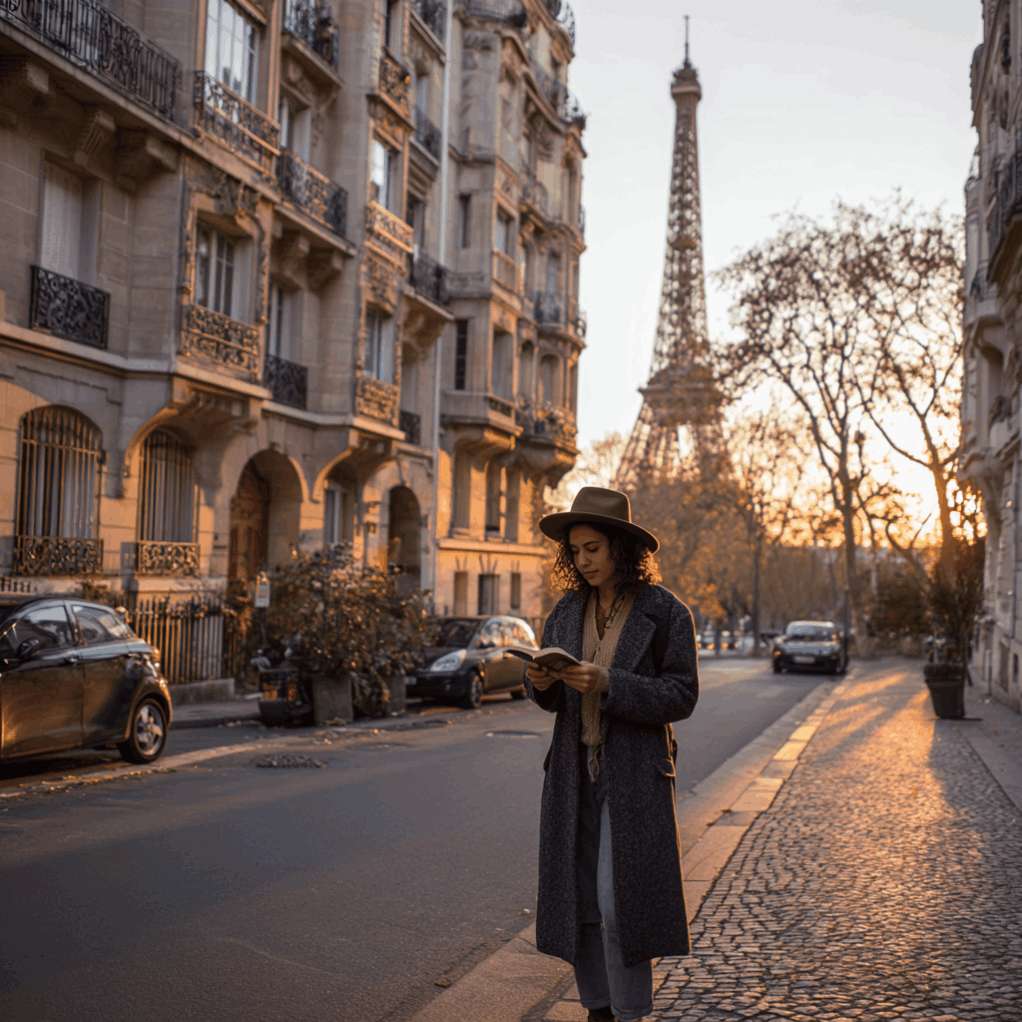
Day 1 – Smart Arrival and Easy Start
Begin your first day gently. After settling in, head to a less touristy neighborhood for a relaxed walk. Choose an area like Le Marais or Canal Saint-Martin instead of jumping straight into the heavy sights. This helps you get comfortable with the city rhythm without fighting crowds right away.
Use the metro early to practice. Buy a reloadable card instead of single tickets, it saves time and money. Learn to read the metro map by color and number, it becomes second nature after just a few rides. Try one short ride during off-peak hours first so you feel confident before the busier times.
For lunch look for small neighborhood bistros where locals eat. Avoid places with big English menus outside. A simple sandwich or salad in a quiet spot gives you energy without wasting time.
In the afternoon visit one main highlight but time it wisely. Go to the Eiffel Tower area late afternoon or early evening when many tour groups have already left. Walk along the Seine instead of standing in long lines. The view is just as beautiful from the bridges.
Day 2 – Efficient Exploration with Crowd Avoidance
This is your main day for culture and movement. Start early, around 8:30 or 9:00, when the city feels fresh. Visit a major museum or landmark right when it opens. Spend focused time on 2–3 favorite sections instead of rushing through everything.
After that use smart walking routes. Instead of following the crowded main streets, take parallel smaller roads. You will see more authentic Paris, nicer buildings, and cute local shops. This habit of choosing quieter paths is a valuable skill for any city.
For lunch pick a market or food hall rather than a sit-down restaurant. It is faster, cheaper, and gives you a chance to see how Parisians shop and eat on a normal day.
In the late afternoon head to a hidden gem. Look for small parks, charming squares, or lesser-known viewpoints. One good example is walking up to Montmartre from the back side instead of the usual busy route. The climb is nicer and you avoid most of the crowds.
Dinner can be simple but meaningful. Find a small wine bar or casual restaurant in a residential area. Sit outside if the weather allows and watch the neighborhood come alive in the evening.
Key Efficiency Hacks for Paris
- Always check metro exit numbers before you arrive, it saves confusion when you surface.
- Walk whenever the distance is under 20–25 minutes, it keeps you connected to the city.
- Visit big attractions either very early or after 5 pm when possible.
- Carry a small reusable water bottle, Paris has many free drinking fountains.
Building Real Skills
During these two days you practice reading transport maps quickly, choosing efficient routes, timing your visits to avoid crowds, and finding authentic spots away from tourist zones. These abilities transfer perfectly to other cities later.
Many travelers make the mistake of trying to see too many famous places in too little time. They end up tired and disappointed. This guide keeps things balanced so you enjoy Paris instead of just checking boxes.
By the end of 48 hours you will move around the city with much more confidence. You will know how to spot quieter streets, use public transport smoothly, and discover places that feel genuinely local.
Paris rewards those who travel smart rather than fast. Use this efficient approach and your trip will feel calmer, richer, and much more satisfying.
Try these tactics on your Paris visit and you will return home not only with beautiful memories but also with stronger travel skills for your next adventure.