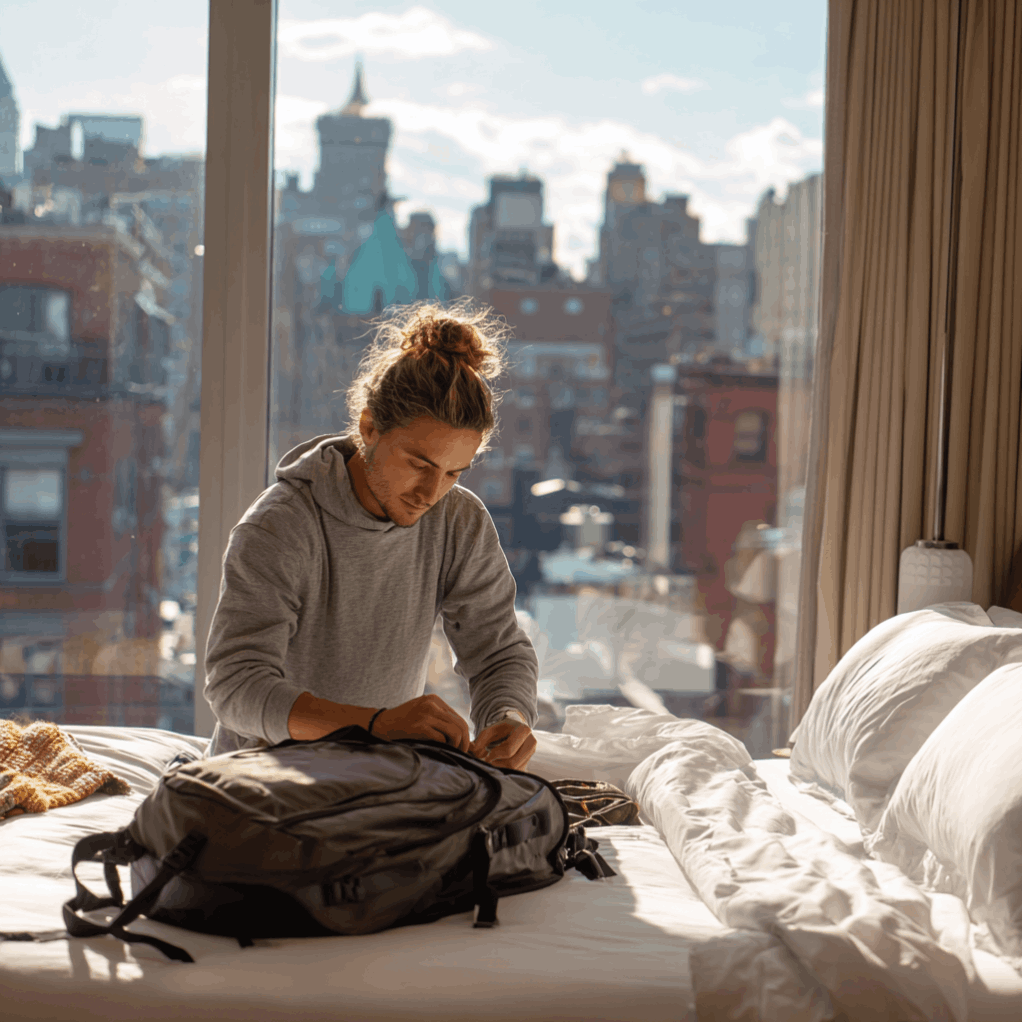
Let’s start with packing light because it changes everything else. The golden rule is simple: if you are not sure you need it, leave it at home. Choose versatile clothes that mix and match easily. Dark colors hide dirt better and look decent even after a long day. Stick to three or four tops, two bottoms, and one light jacket or sweater that works for different weather. Shoes are the biggest space killers so bring only two pairs maximum, one comfortable for walking and one slightly nicer if needed.
Roll your clothes instead of folding them and use packing cubes or simple plastic bags to keep everything organized. Leave space in your bag for souvenirs or things you might buy on the trip. A half empty suitcase on the way home feels much better than a bursting one. Remember, you can always wash clothes or buy a cheap t shirt if you really need something extra.
Now about avoiding tourist traps. The easiest way is to watch where the big groups are going and simply go the other direction. Places with big signs in multiple languages, people standing outside trying to pull you in, or menus with pictures of every dish are usually overpriced and average at best. Instead, walk a few blocks away from the main attractions or visit popular spots early in the morning or later in the evening when crowds thin out.
Look for signs of real local life, small family run cafes with mostly locals inside, grocery stores instead of souvenir shops, and parks where people actually live nearby. If a place feels too perfect for photos and nothing else, it is probably designed to catch tourists rather than serve good experiences.
Choosing the right neighborhood makes the biggest difference on any trip. Stay where real people live, not just where the famous sights are. Good neighborhoods usually have a mix of normal shops, cafes that open early for locals, and a bit of street life in the evenings. Check how easy it is to reach the main attractions from there without spending hours in transport every day.
Read recent reviews that mention daily life, safety at night, and noise levels. A quiet residential area might sound nice but can feel dead after 8pm. A lively district might be perfect for evening walks but too loud for light sleepers. Think about your own rhythm and choose accordingly.
The best neighborhoods often sit between the very center and the far outskirts. They give you authentic atmosphere plus reasonable access to everything else. Spend time looking at maps and walking routes before you book accommodation. A 15 minute walk to good public transport can save you more time and money than a fancy hotel in a touristy spot.
Putting it all together, traveling light helps you stay flexible and move between neighborhoods easily. When you are not dragging heavy luggage you are more likely to explore side streets and discover better places. Avoiding obvious tourist traps becomes natural when you stay in real local areas instead of hotel districts.
These three skills feed each other. Pack minimalist, choose neighborhoods where locals actually spend time, and stay away from places that exist only for visitors. Your trips will feel more genuine, cost less, and leave you with memories that go beyond the usual postcard sights.
Try applying even half of these ideas on your next short trip and you will notice how much more relaxed and connected the whole experience becomes. Less stuff, better location, smarter choices, it really does make all the difference.
Ready to pack lighter and travel deeper? Start with one small change next time and build from there.